I Don’t Have a Waist, So I Can’t Wear a Belt.” Here’s What to Tell Your Customer.
Have you ever heard this statement from a customer?
“I don’t have a waist, so I can’t wear a belt.”
We have.
A lot.

Maybe she carries a little more through her middle. Maybe she doesn't have a naturally defined waist. Or maybe somewhere along the way she simply decided that belts are for women with hourglass figures—and she isn't one of them.
Here’s the good news:
She already has the perfect belt body.
She doesn't need to lose weight. She doesn't need a flatter stomach. And she certainly doesn't need to come back after she's lost those proverbial 10 pounds.
What she may need is a little styling help.
And as a boutique owner or stylist, this is where you have an incredible opportunity—not just to sell her a belt, but to show her something about the clothes and body she already has.
So the next time a customer tells you, “Belts just don't work on me,” here are a few ways to answer that styling woe with actual, tactical advice.
1. First, Agree With Her…Sort Of
If your customer is wearing a tight, fitted top that clings through her middle and you simply cinch a belt around it, she may look in the mirror and immediately say:
“See? I told you I can't wear belts.”
And frankly, she might be right about that outfit.
Not her body.
The outfit.
If the fabric underneath is already clinging through the middle, the belt has very little to work with. Cinching it tighter can emphasize everything immediately above and below it.
Instead of telling her, “No, no, it looks great!” when she clearly doesn't feel great, try this:
“I don't think it's the belt. I think we need to give the belt a little more to work with. Let me show you.”
Now you've changed the conversation.
Her body isn't the problem you're trying to fix.
You're styling the outfit.
BOUTIQUE STYLING TIP: When a customer says a belt “doesn't work” on her, change the garment before changing the belt.


It's not always the belt creating those unwanted bulges...it could be your top! A belt over an already tight shirt can emphasize rolls, whereas a slightly relaxed top gives the belt room to cinch your waist and create a smoother, more flattering silhouette. It's all about choosing the right top to work WITH your belt, not against it!
2. Add Volume, Then Define the Waist
Take that same fitted T-shirt and add a slightly oversized blazer or cardigan.
Now belt it.
Completely different silhouette.
The outer layer gives her some volume and structure. The belt pulls everything inward at one strategic point.
Suddenly, instead of asking the belt to manufacture a waist out of a fitted top, you're using volume + definition to create proportion.
Same customer.
Same body.
Same T-shirt.
Different styling.
This is also one of those wonderful dressing-room moments where you can actually see a customer's expression change when she looks in the mirror.
And that is what great boutique styling is about.
WHAT TO SAY TO YOUR CUSTOMER: “See what happened? Your body didn't change. We just changed the proportions.”


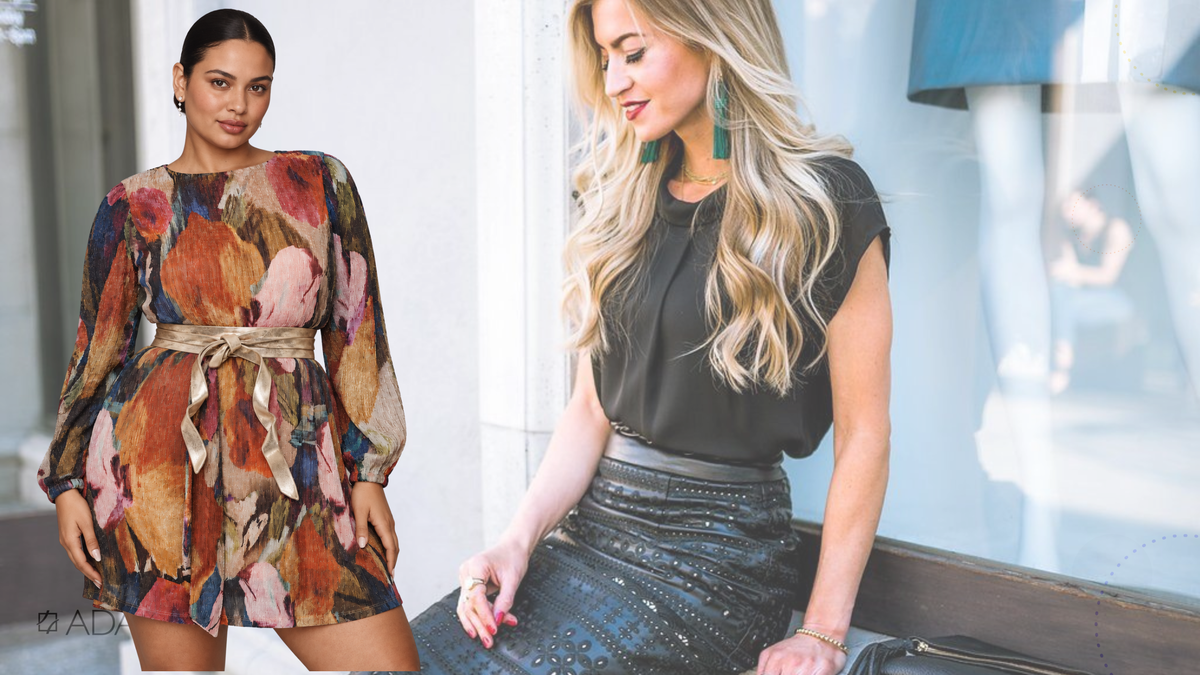
3. Let an A-Line Silhouette Help Create the Waist
An A-line blouse or dress is another easy way to introduce a belt to a customer who says she doesn't have a waist.
The garment already gives you some volume and movement instead of clinging through the middle.
Now add the belt.
The eye sees the fabric come inward at one point and move away again.
The garment creates the shape. The belt defines it.
That's an important concept to teach your customer because once she understands it, she'll start seeing possibilities in pieces she already owns.
WHAT TO SAY TO YOUR CUSTOMER: “You don't have to bring the waist. We're going to create it with the outfit.”

4. Show Her What a Belt Can Do to a Jumpsuit
A relaxed jumpsuit can sometimes become one long column of fabric.
Add a belt and the eye suddenly sees:
Top → Waist → Bottom
You've created a visual break and given the outfit proportion.
This is also a wonderful cross-selling opportunity on your sales floor.
If she's trying on a jumpsuit and likes it but says, “I feel like it does nothing for me,” don't necessarily abandon the jumpsuit.
Bring her a belt.
That one accessory may be the difference between:
“Eh.”
and
“Ohhhh. Now I get it.”
BOUTIQUE STYLING TIP: Don't wait for the customer to ask for a belt. Bring one into the fitting room when she's trying on jumpsuits, loose dresses, blazers and other pieces that could benefit from waist definition.

5. Transform the Shapeless Dress She Almost Didn't Buy
You know that fabulous loose dress hanging in your store?
Beautiful fabric. Great color. Wonderful movement.
And then your customer puts it on and says:
“It's too shapeless on me.”

Before you take it back to the rack, grab a belt.
And importantly, we're talking about a dress with volume, not a tight or clingy dress.
When you belt a loose, voluminous dress, some fabric blouses above the belt and the rest flows away below it.
That's exactly what we want.
The dress gives her the volume. The belt gives her the shape.
Now the dress she was about to reject may suddenly become the outfit she loves.
And you've done something much more valuable than selling her two products instead of one.
You've shown her how to see clothes differently.
WHAT TO SAY TO YOUR CUSTOMER: “Before we give up on the dress, let me show you what happens when we give all this beautiful fabric a little structure.”

6. Use a Belt to Create the Focal Point in a Monochromatic Outfit
Here's another styling lesson that's incredibly easy to demonstrate in-store.
Create a monochromatic look:
Cream on cream.
Black on black.
Navy on navy.
Chocolate on chocolate.
Dressing in one color creates a beautiful, long visual line.
Now add a contrasting belt.
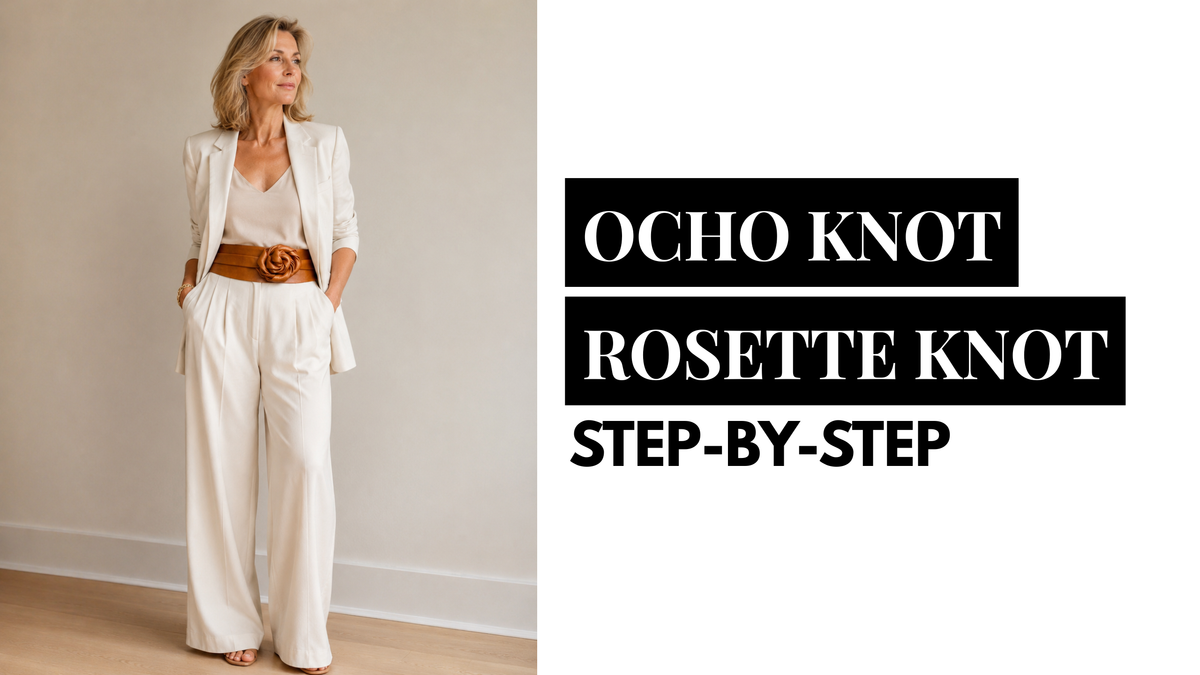
Cognac over cream.
Black over camel.
Metallic over black.
Or perhaps a color that makes the entire outfit come alive.
Where does your customer's eye go?
Straight to the belt.
And where did you put it?
At her waist.
That's the magic.
The monochromatic outfit creates the long line.
The belt creates the focal point—and visually establishes the waist.
BOUTIQUE MERCHANDISING IDEA: Merchandise a monochromatic mannequin or display and use the belt as the intentional color break. You're not just displaying a belt; you're demonstrating what the belt DOES.


7. Belt the Blazer and Create the Shape
This is another fantastic trick for a customer who tells you she doesn't have an hourglass figure.
A slightly oversized or structured blazer gives you volume through the shoulders and torso.
Add the belt and bring the middle inward.
Now visually you have:
OUT → IN → OUT
That creates the appearance of a more defined waist.
Her body didn't suddenly become an hourglass.
Her outfit created the proportion.
That's an incredibly important distinction.
WHAT TO SAY TO YOUR CUSTOMER: “We're not trying to change your body. We're creating the silhouette with the clothes.”

8. Don't Forget That Belt Placement Matters
Here's where you can really add value as a stylist.
Don't automatically put the belt where you think it's “supposed” to go.
Move it.
Try it slightly higher.
Try it at her natural waist.
Loosen it a little.
Blouse the fabric differently.
Then ask:
“Which proportion do you like best?”


Notice I didn't say, “Which one makes you look thinnest?”
We're not trying to convince her that smaller is better.
We're helping her discover the proportions that make her feel fantastic.
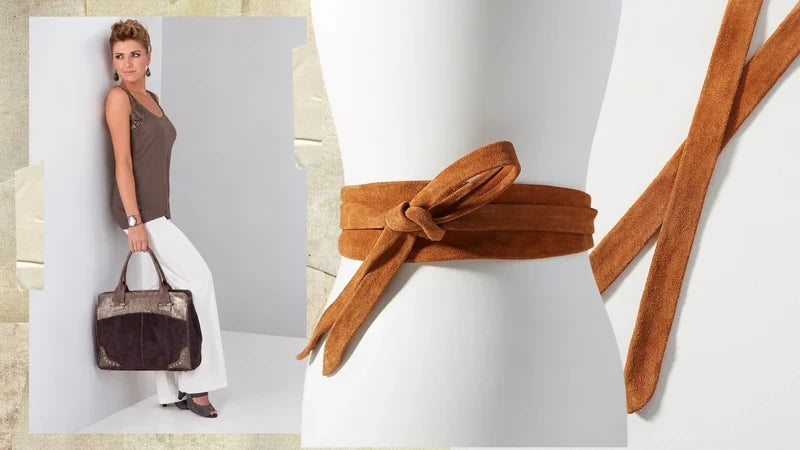
This is one reason adjustable wrap belts can be such useful styling tools. You're not locked into predetermined holes or one exact placement. You can adjust the position and fit depending on the woman and the garment.
BOUTIQUE STYLING TIP: Don't just hand her the belt. Style it on her. Move it around. Show her two or three options. You're teaching her something she can repeat at home.

9. Sell the Transformation, Not Just the Belt
This might be the most important takeaway for a boutique owner.
Your customer isn't necessarily walking into your store thinking:
I need a leather belt today.
She's thinking:
Why doesn't this dress look right?
How do I give this outfit more shape?
I love this jumpsuit, but something is missing.
I don't know how to style this.
Or simply:
I don't feel great in this.
That's where the belt becomes much more than another accessory hanging on a rack.
It's a styling solution.
And when you demonstrate the solution instead of simply displaying the product, your customer understands why she needs it.

10. Help Her Realize She Already Has the Perfect “Belt Body”
The next time a customer tells you:
“I can't wear a belt. I don't have a waist.”
Don't argue with her.
And don't tell her she needs a different body.
Show her.
Grab the blazer.
Bring over the jumpsuit.
Pull the loose dress.
Create the monochromatic look.
Move the belt slightly higher.
Let her see what happens.
Because the real lesson isn't:
You'd look great in a belt if you lost weight.
It's not:
Belts only work if you have an hourglass figure.
And it's definitely not:
Maybe belts just aren't for you.
The lesson is:
You already have the perfect belt body. We just need to show you how to style it.
And when a woman looks in the mirror and realizes that?
You've done more than sell her a belt.
You've given her another way to feel good in the clothes—and the body—she already has.
And that's the kind of styling experience she remembers.

Belt Styling FAQs for Boutique Owners
What should I say when a customer tells me she doesn't have the body for a belt?
Rather than immediately disagreeing with her, show her how styling changes the silhouette. Try adding a blazer, loose dress, jumpsuit or another garment with some volume, then add the belt. Let her see that her body didn't need to change—the proportions of the outfit did.
How do I style a belt on a customer who carries weight around her middle?
Avoid starting with a belt cinched tightly over a clingy garment. Instead, create some volume or structure around the waist with a blazer, cardigan, A-line silhouette, loose dress or relaxed jumpsuit. Then use the belt to define the middle.
What clothing should boutique owners merchandise with belts?
Belts are especially useful alongside loose dresses, jumpsuits, blazers, cardigans, monochromatic outfits and other garments where defining the middle changes the silhouette. Merchandising belts as part of complete outfits helps customers understand what the accessory actually does.
How can belts help boutiques increase outfit sales?
Instead of treating a belt as a standalone accessory, use it as a styling tool in the fitting room. A belt can change the proportions of a dress, jumpsuit or blazer a customer isn't quite sure about—and can help her see an entirely different way to wear the piece.
Why are adjustable wrap belts useful for boutique styling?
An adjustable wrap belt gives the stylist flexibility to experiment with placement and fit on different customers and garments. You can position it slightly higher or lower, adjust the tension and change how the surrounding fabric falls—making one belt useful across many different looks and body proportions.
For the boutique owner reading this, here's your challenge: the next time you hear “I can't wear a belt,” don't reach for another size.
— Ada
Founder & Designer, ADA Collection

Leave a comment
This site is protected by hCaptcha and the hCaptcha Privacy Policy and Terms of Service apply.